Copper is widely used in electrical systems, construction,
transport, electronics and energy infrastructure. It is also a
naturally occurring metal with complex redox and coordination
chemistry. This combination makes Cu especially useful when the
objective is to distinguish sources while also understanding
what happened to the metal during transport or transformation.
Where is Cu found?
Copper occurs in a wide range of geological materials,
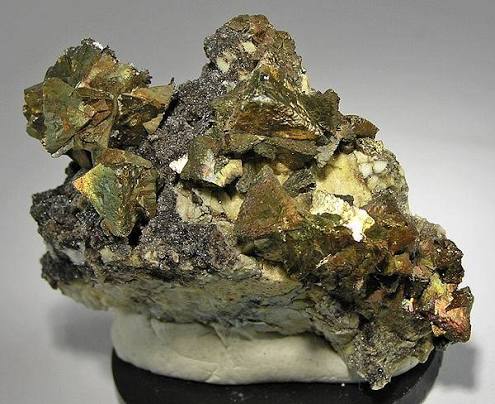
including sulfide minerals such as chalcopyrite and bornite,
as well as oxides, carbonates and native copper. Mining,
smelting, industrial activities, urban emissions and the use
of Cu-bearing products can introduce additional Cu into soils,
waters, sediments and particulate matter.
Why is Cu isotopically distinctive?
Copper has two stable isotopes, ⁶³Cu and ⁶⁵Cu. Because Cu
changes oxidation state and forms different aqueous, mineral
and organic complexes, measurable isotope fractionation can
develop during reactions such as oxidation, dissolution,
precipitation, adsorption and complexation.
Why are Cu isotopes useful?
The δ⁶⁵Cu signature can provide two complementary types of
information: comparison between potential source materials
and evidence of the reactions affecting Cu after release.
This makes Cu isotopes particularly valuable when source
tracing and process tracing need to be considered together.