Element focus · Zinc

Zinc isotopes: tracing sources and environmental processes.

Zinc is widely distributed in natural and industrial systems. Its stable isotope composition can help distinguish different sources while also recording processes such as weathering, adsorption, complexation, biological uptake and transfer between environmental compartments.

30 Zn zinc 65.38
⁶⁴Zn 48.63%
⁶⁶Zn 27.90%
01 · Context

Why zinc?

Zinc is both an essential trace element and an important industrial metal. It is widely used in galvanisation, alloys, batteries and numerous manufactured products, while naturally occurring Zn is present in rocks, ores, soils, waters and biological systems. Its widespread occurrence makes source identification particularly important.

Where is Zn found?

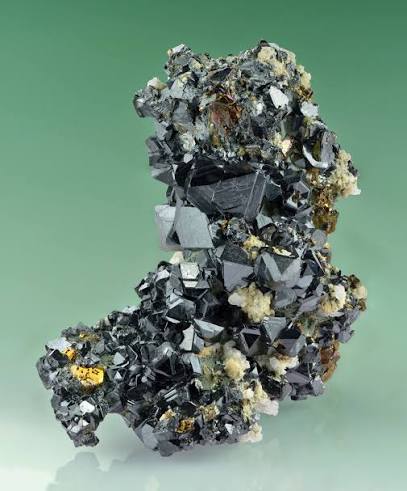
Zinc occurs naturally in many geological materials, with sphalerite (ZnS) representing its principal ore mineral. It is also associated with polymetallic deposits and can be released to the environment through mining, smelting, industrial activities, road traffic, corrosion and the use or disposal of Zn-bearing materials.

Why is Zn isotopically distinctive?

Zinc has five naturally occurring stable isotopes. Although Zn occurs predominantly as Zn²⁺, its isotopes can fractionate during processes such as adsorption, complexation, precipitation, chemical weathering and biological uptake. These variations are commonly expressed using δ⁶⁶Zn.

Why are Zn isotopes useful?

Zn isotope compositions can provide information about both where zinc originates and what processes have affected it during transport. This dual sensitivity makes δ⁶⁶Zn useful for environmental contamination studies, biogeochemical investigations and the comparison of industrial or geological source materials.

02 · Analytical

How we analyse Zn isotopes.

High-precision Zn isotope analysis requires complete sample dissolution and efficient separation of Zn from elements that can generate isobaric or molecular interferences. Purified Zn is measured by MC-ICP-MS, with instrumental mass fractionation corrected using a double-spike or external-normalisation approach depending on the analytical strategy.

1

Sample preparation

Preparation is adapted to the sample matrix. Geological materials are typically digested using HF–HNO₃ mixtures, followed by additional acid treatment to ensure complete dissolution and convert Zn into a form suitable for chromatographic separation.

2

Zn purification

Zinc is separated from the surrounding matrix using strong anion-exchange resins such as AG1-X8 or AG-MP-1. Acid conditions are adjusted to remove elements such as Fe, Ni, Cr, Ti and other potential interferents before collecting the purified Zn fraction.

3

MC-ICP-MS measurement

Purified Zn is introduced into a multi-collector ICP-MS for simultaneous measurement of several Zn isotope masses. High-resolution conditions can be used when necessary to control isobaric and molecular interferences.

4

Mass-bias correction and δ⁶⁶Zn

Instrumental mass fractionation is corrected using isotope standards, sample-standard bracketing, Cu external normalisation or a ⁶⁴Zn–⁶⁷Zn double spike. Results are commonly reported as δ⁶⁶Zn relative to a Zn isotope reference material.

Sphalerite mineral specimen
Prepare Complete digestion

Matrix-specific acid dissolution before chromatographic separation.

Purify Anion-exchange resin

Zn isolation from matrix elements and potential interferents.

Measure MC-ICP-MS

High-precision simultaneous measurement of Zn isotope masses.

Validate Recovery + standards

Blank control, quantitative yield and mass-bias correction.

5

Stable Zn isotopes

Naturally occurring Zn comprises ⁶⁴Zn, ⁶⁶Zn, ⁶⁷Zn, ⁶⁸Zn and ⁷⁰Zn.

28 ng

Zn per analysis

High-precision isotope measurement has been demonstrated using only about 28 ng of Zn per individual analysis.

100 ± 5%

Zn recovery

Near-quantitative recovery through the complete analytical procedure helps prevent chromatography-induced isotope bias.

0.5 ng

Procedural blank

Very low total Zn blank demonstrated for digestion, purification and isotope measurement.

40 ppb

Measurement solution

Zn isotope measurements can be performed at low solution concentrations while retaining high analytical precision.

0.02‰

Analytical precision

High-precision double-spike measurements can achieve approximately 0.02‰ precision for δ⁶⁶Zn.

0.02–0.05‰

External reproducibility

External reproducibility demonstrated on geological reference materials under controlled analytical conditions.

30–50 mg

Typical geological aliquot

Geological powders in this mass range have been used for complete digestion, Zn purification and isotope analysis.

Method basis

Analytical values are based on Maréchal et al. (1999), Amet & Fitoussi (2020) and Zhong et al. (2025). These studies establish the principles of Zn purification by anion-exchange chromatography, high-precision MC-ICP-MS measurement using external normalisation or double-spike correction, and modern procedures for complex geological matrices. The exact digestion, purification chemistry and required sample mass are adapted to the matrix and available Zn.   Maréchal et al. (1999) →    Amet & Fitoussi (2020) →    Zhong et al. (2025) →

03 · Interpretation

What can Zn isotopes tell us?

Zn isotope interpretation combines source comparison with an understanding of the physical, chemical and biological processes that can modify δ⁶⁶Zn. Concentration data, geochemistry and well-characterised candidate sources therefore provide essential context for isotope measurements.

Distinguish contamination sources

Natural mineralisation, mining residues, metallurgical emissions and other anthropogenic inputs can carry different Zn isotope signatures. Comparing contaminated samples with potential sources can therefore help narrow the origin of zinc.

Example: comparing soil, sediment or particulate Zn with local ores, industrial residues and background materials to evaluate the most plausible contamination source.

Track adsorption and retention

Zinc isotope fractionation can occur when Zn interacts with mineral surfaces, oxides, clays and organic matter. Changes in δ⁶⁶Zn can therefore provide information on whether zinc is being transported or retained within an environmental system.

Example: following isotope changes between dissolved and solid phases to identify where Zn is being immobilised during transport.

Understand biological uptake and cycling

Zinc is an essential nutrient and undergoes isotope fractionation during biological uptake and internal transfer. Zn isotopes can therefore help investigate interactions between dissolved Zn, soils, plants and biological systems.

Example: comparing Zn isotope signatures across soil, water and biological compartments to investigate how zinc is transferred through the system.

Trace industrial and material sources

Zn-bearing ores, industrial products and processing residues can display distinct isotope compositions. Where the source signal remains preserved, δ⁶⁶Zn can complement elemental chemistry to compare raw materials, emissions and material streams.

Example: testing whether Zn found in different materials or emissions is compatible with a common source or requires several contributing sources.
Zn isotopes record both source and process.

A difference in δ⁶⁶Zn does not automatically indicate a different source. Adsorption, complexation, biological uptake, weathering and precipitation can also modify the isotope composition. Robust interpretation therefore combines isotope data with chemistry and knowledge of the processes acting on the system.

Discuss a Zn project